Tower War - Tactical Conquest
SayGames LtdArcade
4.217.77K Reviews
- Version
- 1.30.1
- Installs
- 100.00M
- Age Rating
- Everyone 10+
Screenshots

Our Review of Tower War - Tactical Conquest
 Analysis by Appyee
I usually judge a mobile strategy game by a practical question: does it give me interesting decisions in short sessions, or does it ask for more attention than I want to give a phone game? Tower War - Tactical Conquest leans toward quick, active battles, but it still expects me to think about timing and how to use the forces at hand. That mix makes it worth considering if you want an arcade game with a tactical edge rather than a slow, elaborate strategy campaign.
Made by SayGames Ltd, it is free to download, with optional in-app purchases ranging from $0.99 to $99.99 per item. The game is rated Everyone 10+, has a 4.3 average from around 632,000 ratings, and has been installed over 50 million times. Those figures suggest it has reached a broad audience, but they cannot tell you whether its pace or style will suit you. I’d make that decision based on what you enjoy doing in a battle: reacting quickly, planning a few moves ahead, or building a larger long-term strategy.
Choosing a Tactical Arcade Game
It helps to set expectations before playing. This is an arcade strategy game, not a substitute for a deep, long-form strategy title. Its appeal is the immediate contest: watch the battlefield, choose where to commit, and adjust when a push does not work. The central challenge is less about studying a complicated ruleset and more about making useful decisions under pressure.
The current version is 1.26.1, and the game runs on Android 8.0 or later. That gives prospective Android players a simple compatibility check before downloading. If you are choosing between phone games, also consider your usual playing conditions. A compact tactical game can suit a break between errands, while someone who wants a quiet, uninterrupted session with extensive planning may prefer a different kind of strategy game.
What the Battles Ask of You
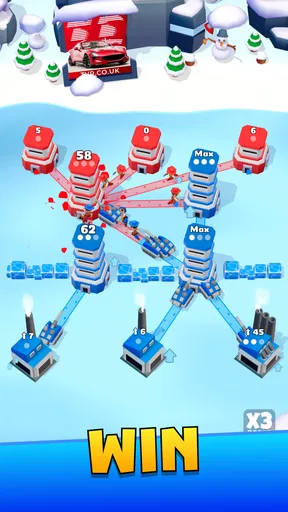
When you first dive into Tower War - Tactical Conquest, you’ll find yourself in a vibrant world where strategy is king. The premise is pretty straightforward: you’ve got to build and fortify your tower while simultaneously plotting how to bring down your opponent’s fortress. Sounds simple, right? Well, not quite. There’s a lot more to it than meets the eye.
The game kicks off with a tutorial that’s both helpful and not overly hand-holdy. I appreciated that it didn’t feel like a chore to get through. It quickly gets you up to speed on the essentials, like how to gather resources and deploy troops. The controls are intuitive, and you’ll be commanding your army like a pro in no time.
For a first session, I’d focus on understanding the relationship between building up and attacking instead of trying to make every move perfectly. If you spend all your attention on offense, you can leave your position exposed; if you concentrate only on defense, you may fail to create pressure. Treat each battle as a chance to learn which choice caused a swing in momentum. That simple habit makes losses more informative and helps the tactical side feel less like guesswork.
A useful way to approach a difficult moment is to pause mentally before committing: ask whether the next move protects your position, creates an opening, or simply spends resources because the battlefield looks busy. In a game with both tower decisions and troop deployment, those are not always the same thing. I found that separating “I need to survive” from “I want to attack” makes choices clearer, especially when the fight becomes hectic.
Where the Game Finds Its Strength
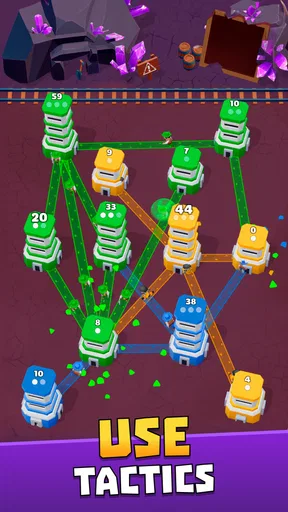
What really grabbed me was the strategic depth of the game. You’ve got to think several steps ahead, kind of like a game of chess but with a lot more explosions. You’ll need to decide which units to deploy, when to upgrade your tower, and how to best utilize special abilities. Each decision can make or break your game, so it’s all about planning and timing.
The battles are intense, with just the right amount of chaos to keep things exciting without feeling overwhelming. One moment you’re on the brink of defeat, and the next, you’ve turned the tide in your favor. It’s this unpredictability that keeps you coming back for more.
The strongest fit is for someone who likes to stay mentally engaged without needing to memorize a large rulebook. You can play attentively for a short stretch and still have a clear problem to solve: how to balance pressure, protection, and the moment to change course. That makes it easier to pick up than a sprawling empire-building game, while offering more to think about than an arcade title where success is mostly about reflexes.
It also works well as a small challenge during an ordinary day. Imagine having a few minutes before leaving home or waiting for someone: you can start a battle, focus on the current tactical problem, and put the phone away afterward. The game’s appeal in that situation is not that every session will be effortless; it is that its central decisions are easy to understand quickly. If you are likely to be interrupted, though, avoid starting when you need to give your attention to something else. A tactical battle is more satisfying when you can follow what is happening rather than make rushed moves between distractions.
One non-obvious way to improve is to review the reason a turn went wrong instead of blaming a single unit or ability. Did you commit too early, leave too little room to defend, or react to the opponent without a plan of your own? Keeping that question in mind helps you recognize patterns across battles. It is a more useful habit than repeating the same opening automatically, because the right choice depends on the situation you face.
How It Compares With Other Phone Games
Compared with casual arcade games built mostly around quick reactions, this one asks for more deliberate choices. Compared with traditional strategy games, it keeps the focus closer to the immediate battle rather than asking you to manage a broad campaign. That middle ground is its clearest advantage: it gives tactical thinking a prominent role without requiring the commitment many players associate with a large strategy game.
There are trade-offs. If you want a calm puzzle where you can consider each move at length, the pressure and battlefield changes may feel distracting. If you want a deep management game with layers of long-term development, this is not the choice I would make for that mood either. And if what you enjoy most is a purely reflex-driven arcade game, the planning may feel like an interruption rather than the point. The best alternative depends on which of those experiences you want; there is no need to treat one style as universally better.
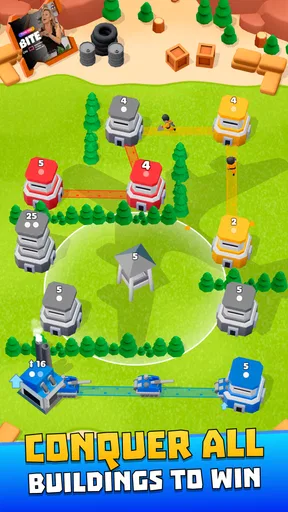
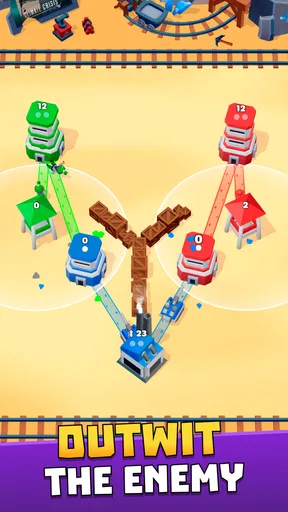
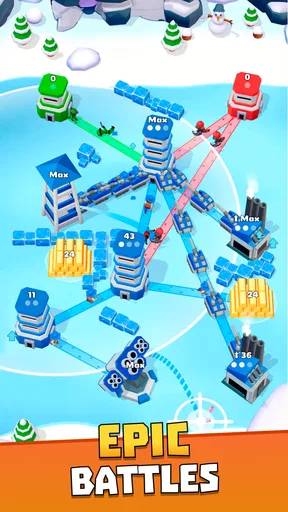
The colorful presentation helps keep the action readable. Visually, the game is a treat. The graphics are vibrant and colorful, with each unit and tower boasting distinct designs. It’s easy to distinguish between different elements on the battlefield, which is crucial in the heat of battle.
The sound design complements the visuals perfectly. The soundtrack is engaging, and the sound effects add an extra layer of immersion. Whether it’s the clash of swords or the roar of cannons, the audio gives you that satisfying war-time vibe.
In practical terms, clear visual distinctions matter because tactical decisions are only satisfying when you can tell what is happening well enough to respond. The presentation supports that immediate reading of the battlefield rather than turning the game into a wall of tiny details. Sound adds atmosphere, but I would not make it the main reason to choose the game: the decisions are the real draw. If you often play with audio muted, the visuals and core tactical choices are still the parts to consider first.
Things to Weigh Before Downloading
The free download lowers the barrier to trying it, but optional purchases are part of the picture. The listed purchase range runs from $0.99 to $99.99 per item, so I would decide in advance whether I am comfortable with spending inside a mobile game. You can approach it as a free-to-play experience and see whether the core battles hold your interest before considering any purchase. I would not spend simply because a match feels difficult; first work out whether a different tactical choice would help.
That is also a sensible way to judge whether the game deserves a place on your phone. Give it enough time to get past the tutorial and understand the basic rhythm, then ask yourself whether you enjoy making decisions during the battles. If you do, the game’s free entry point makes trying it straightforward. If the combat feels stressful or the strategic layer is too light for your taste, there is little reason to force yourself to continue just because it is popular.
One trade-off that is easy to overlook is attention. The battles may fit into a short break, but their tactical rhythm is not the same as a game you can play while half-watching something else. I would choose it when I have a few minutes to concentrate, rather than when I need a distraction that tolerates constant interruptions. That distinction matters more than the label “arcade”: a quick format can still call for active focus.
Another useful question is what kind of progress feels rewarding to you. If you enjoy improving through better decisions, the emphasis on timing and deployment gives you a reason to refine your approach. If you mainly want a game that continually opens up a large world or a long campaign, you may find this narrower battle focus limiting. I would choose it for the satisfaction of handling a tactical encounter, not for a broad sense of exploration or management.
For a new player, a sensible routine is to learn the controls first, then pay attention to how each choice changes the pressure of a fight. Avoid changing several habits at once when a battle goes badly; otherwise, it becomes harder to tell what helped. Try one adjustment in your approach, see whether it improves your next decision, and build from there. That makes the game feel more tactical and less like a string of unpredictable outcomes.
Who Should Play—and Who May Prefer Something Else
I would recommend it to players who enjoy compact strategy challenges, readable action, and the feeling of turning a battle around through timing. It should also suit someone who is curious about tactical games but does not want to begin with a heavyweight strategy title. The tutorial gives newcomers a route into the basics, while the decisions about deploying troops, improving a tower, and choosing when to use abilities give experienced players familiar strategic questions in a brisker format.
I would steer away from it if you dislike making decisions under pressure, want a completely hands-off idle game, or prefer long, carefully managed campaigns. It may also be a poor match if you are trying to avoid optional in-app purchases altogether and would rather play a title with no purchase prompts or spending considerations. The presence of optional purchases does not mean you need to buy anything, but it is worth knowing your own comfort level before you start.
There is also a difference between wanting “strategy” and wanting this particular kind of strategy. A thoughtful turn-based game is a better fit when you want to stop and calculate without the same sense of urgency. A simple action game is a better fit when you want immediate input and little planning. This one makes most sense in the space between those choices, where reacting matters but a quick reaction alone is not enough.
Final Thoughts
All in all, Tower War - Tactical Conquest is a blast. It offers a perfect blend of strategy and action, making it a must-try for any mobile gamer looking for something a bit more cerebral. Whether you’re a seasoned strategist or new to the genre, there’s plenty here to keep you entertained.
If you’re ready to test your wits and tactical prowess, give it a download. Just be prepared to lose track of time—this game is addictively fun!
My recommendation is more specific: try it if you want a free arcade game where battles reward attention and adjustments, and keep your expectations centered on tactical encounters rather than a huge strategy campaign. Start by learning the basics, then judge the game by whether its decisions make you curious to try a different approach after a setback. If that loop clicks, it can be a satisfying choice for short, focused sessions. If you would rather play at a slower pace, avoid spending within games, or want extensive long-term planning, another kind of mobile strategy game will likely suit you better.
Privacy and Permissions
See what permissions an app requests and how it handles your data.
- Wi-Fi connection information
- view Wi-Fi connections
- Other
- view network connections, full network access, control vibration, prevent device from sleeping, Google Play license check
Verdict
Strengths of Tower War - Tactical Conquest
- Easy-to-learn gameplay mechanics.
- Visually engaging graphics.
- Regular updates with new features.
- Strategic depth in level design.
- Offline mode available for play.
Limitations of Tower War - Tactical Conquest
- Repetitive level structure.
- In-app purchases can be pricey.
- Occasional connectivity issues.
- Limited customization options.
- Ads can be intrusive.
Other Releases by SayGames Ltd
View All
Turbo Stars - Rival Racing
Racing4.6

Johnny Trigger: Action Shooter
Action4.6

DOP 4: Draw One Part
Puzzle4.4

DOP: Draw One Part
Puzzle4.4
Similar Picks in This Category
View All
Subway Surfers
SYBO Games4.6

Stickman Party 234 MiniGames
PlayMax Game Studio4.6

Subway Princess Runner
Ivy4.4

Temple Run
Imangi Studios4.2

Zombie Tsunami
Mobigame SAS4.6

Stack Ball - Crash Platforms
CASUAL AZUR GAMES4.5
Frequently Asked Questions
What is the main objective of Tower War - Tactical Conquest?
In Tower War - Tactical Conquest, the primary objective is to strategically conquer enemy towers while defending your own. Players must use tactical skills to deploy troops, manage resources, and outmaneuver opponents. Success requires balancing offense and defense, adapting strategies, and making quick decisions to dominate the battlefield.
Are there different game modes available in Tower War - Tactical Conquest?
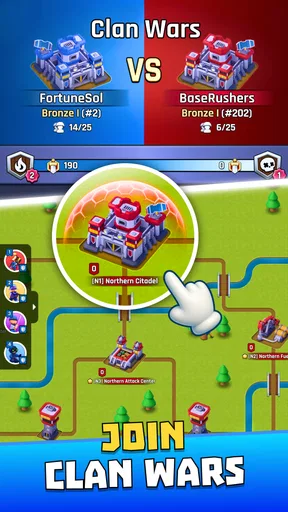
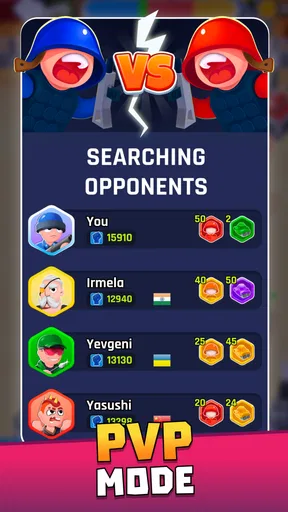
Yes, Tower War - Tactical Conquest offers various game modes to enhance the gaming experience. Players can engage in single-player campaigns to hone their skills or participate in multiplayer battles for a competitive edge. Each mode provides unique challenges and opportunities to test different strategies and tactics.
What are the system requirements for Tower War - Tactical Conquest?
Tower War - Tactical Conquest is designed to run smoothly on most modern Android and iOS devices. It requires a minimum of Android 5.0 or iOS 10.0 to ensure optimal performance. While the game is lightweight, having a device with sufficient RAM and storage will enhance gameplay experience.
Is there in-game purchasing in Tower War - Tactical Conquest?
Yes, the game includes in-game purchasing options. Players can buy additional resources, special items, and cosmetic upgrades to enhance gameplay. While purchases can provide advantages, they are not necessary to enjoy or succeed in the game, as skill and strategy remain key components.
How can I improve my strategic skills in Tower War - Tactical Conquest?
To improve strategic skills, players should start by familiarizing themselves with different troop types and their strengths. Experimenting with various strategies in both single-player and multiplayer modes will help. Additionally, analyzing opponent tactics and learning from losses can significantly enhance tactical acumen.
Play our best games!


